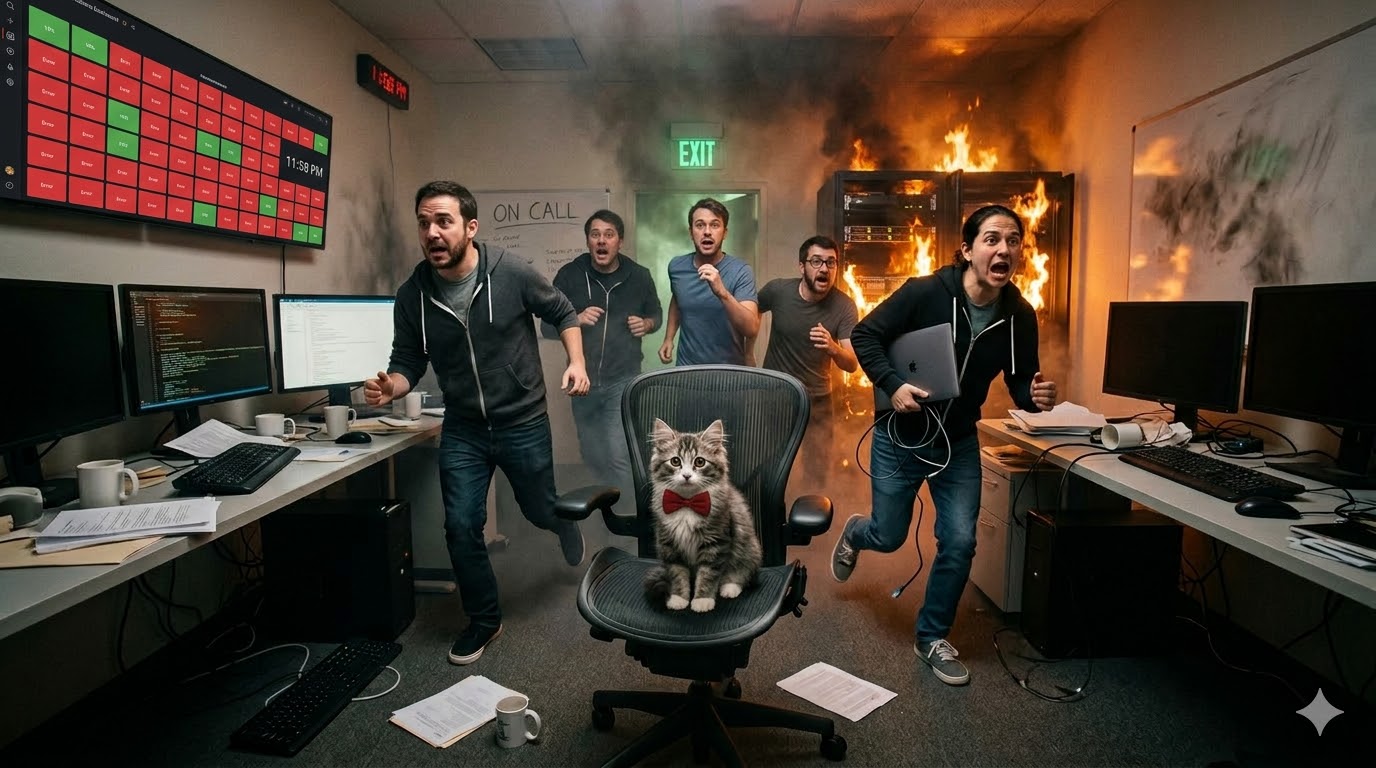
Ah, on-call duty, the crown jewel of modern DevOps. It’s like a never-ending adventure, where your pagers are your trusty sidekicks, and your sleep schedule? Well, who needs sleep anyway? In this guide, we’re going to explore the absolute worst ways to manage on-call, ensuring that your team’s misery knows no bounds. After all, who needs stability, sanity, or a good night’s sleep when you can embrace chaos and frustration?
Never Set Clear Responsibilities
Why bother with role assignments? Just let everyone on the team have the privilege of being woken up at 3 AM for any and every incident. It’s like a surprise party, except no one’s happy, and there’s no cake.
Ignore Escalation Paths
Escalation paths are for the weak. When something goes wrong, have all alerts go directly to the most junior team member. They’ll either figure it out or suffer the consequences. It’s like a Darwinian approach to problem-solving.
Use an Outdated Alerting System
The more outdated and unreliable your alerting system, the better. Bonus points if it sends alerts hours after the incident has already occurred. Let the fun of debugging begin!
Never Document Anything
Documentation is overrated. Keep all your tribal knowledge in your head, and make sure to take it with you when you leave the company. The more cryptic and outdated your documentation, the more job security you have.
Schedule Meetings During On-Call Shifts
Ensure that on-call engineers are busy in endless meetings throughout their shifts. Who needs uninterrupted focus to resolve incidents when you can discuss the agenda for the next meeting about meetings?
Celebrate Burnout
Promote a culture where burning out is a badge of honor. Encourage team members to compete for who can endure the most sleepless nights and stressful incidents. Exhaustion builds character, right?
Don’t Invest in Monitoring
Why waste time and resources on monitoring tools? Just wait until a user complains loudly, then scramble to fix the problem. It’s the ultimate adrenaline rush!
Always Blame the Person on Call
When something goes wrong, it’s crucial to find a scapegoat immediately. Never mind the underlying issues or systemic problems; it’s clearly the on-call engineer’s fault for being on call at that precise moment.
Embrace Chaos as a Lifestyle
Make sure your chaos engineering experiments are conducted during on-call shifts. Nothing keeps engineers on their toes like unpredictable chaos monkeys wreaking havoc in your production environment.
Provide No Mental Health Support
Finally, ensure that there are no resources or support systems in place to help on-call engineers cope with the stress and anxiety. Mental health is for the weak, and everyone knows that DevOps is all about toughening up.
Remember, managing on-call the wrong way is not just a job; it’s an adventure. By following these guidelines, you can guarantee that your team will be perpetually frazzled, perpetually exhausted, and perpetually looking for new employment opportunities. Happy on-calling, or should we say, “on-yelling at your monitor”!